
How to Pet a Cat the Right Way: A Cat Mom’s Guide to Building Trust

There’s something so special about the moment a cat leans into your hand and quietly says, yes, this is nice.
As a cat mom, I used to think petting a cat was simple. If my kitty came close, I’d naturally reach out and stroke her back or try to sneak in a cuddle. Sometimes she loved it. Other times, I’d get a tail flick, a quick turn of the head, or that unmistakable look that meant, okay, that’s enough now.
Over time, I learned that knowing how to pet a cat the right way isn’t really about doing more. It’s about noticing more. Cats are wonderfully affectionate, but they’re also sensitive, expressive, and very honest about what they do and don’t enjoy.
If you’ve ever wondered where cats like to be pet, why some cats get overstimulated, or how to make petting feel safer and more comforting, this gentle guide is for you.
Why Learning How to Pet a Cat Properly Matters
Petting is one of the simplest ways we bond with our cats, but it only feels loving if the cat enjoys it too. Cats have sensitive bodies, clear preferences, and personal boundaries. What feels soothing to one kitty may feel overwhelming to another.
When you learn how to pet a cat properly, you can help:
- build trust
- strengthen your bond
- reduce stress
- encourage calm behavior
- make handling feel safer over time
One of the biggest lessons I’ve learned as a cat mom is that affection works best when it feels respectful. The goal isn’t just to touch your cat. It’s to make your cat feel safe, understood, and comfortable.
Let Your Cat Initiate Contact First
If you want to know how to pet a cat so they enjoy it, start by giving them a choice.
Instead of reaching over your cat right away, offer your hand and let your kitty decide whether to come closer. This small pause can make a huge difference.
Try this:
- sit or kneel near your cat
- extend a relaxed hand
- let your cat sniff first
- wait for a cheek rub, head bump, or lean-in
If your cat presses into your fingers, that’s usually a lovely sign that petting is welcome. If she turns away, stays tense, or flicks her tail, it may not be the right moment.
Cats often trust us more when they feel in control of the interaction.
Where Do Cats Like to Be Pet?
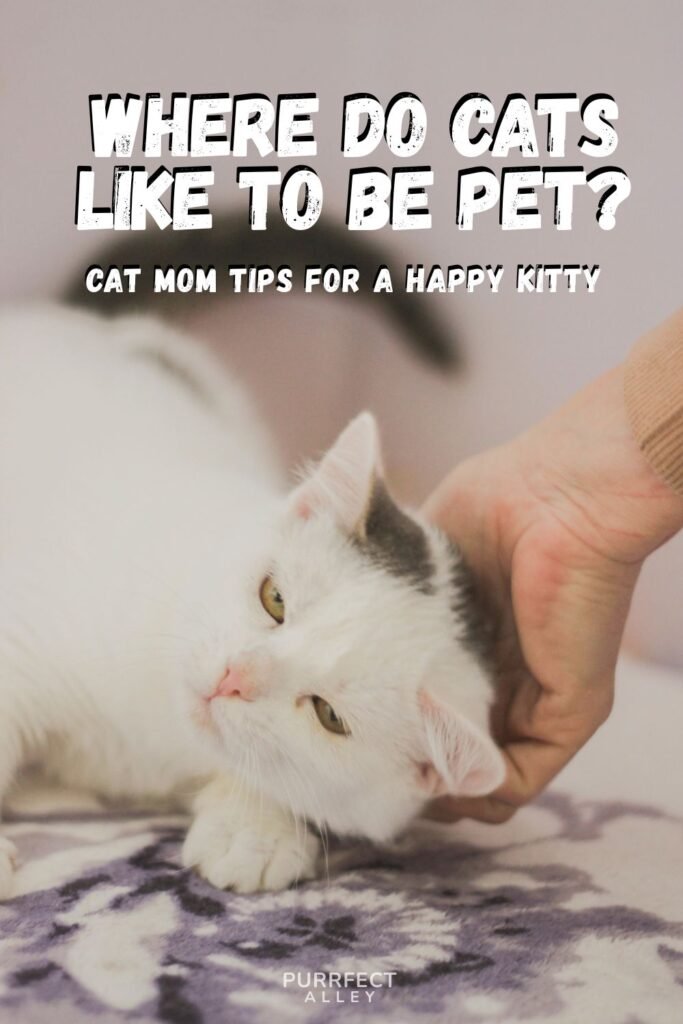
One of the most common questions cat moms ask is: where do cats like to be pet?
And honestly, it’s such a good question, because cats can be incredibly affectionate while still being very particular about how they like to be touched. One kitty may melt into a chin scratch, while another prefers a soft cheek rub and nothing more. That’s why learning your own cat’s favorite petting spots can make such a difference in building trust.
In general, many cats enjoy touch in a few familiar areas that feel safe, soothing, and socially natural to them.
Cheeks
The cheeks are often one of the easiest and happiest places to start. Cats have scent glands around their cheeks, which is one reason they rub their faces on us, on furniture, and on the corners of walls. When you gently stroke or rub this area, it can feel comforting and familiar to them.
This is also why so many cats lean into a hand offered at cheek level. It’s a sweet little sign that they’re open to connection and enjoying the interaction.
Under the Chin
A soft chin scratch is another favorite for many cats. If your kitty lifts her chin, half-closes her eyes, or stays perfectly still in that blissed-out way cats do, there’s a good chance you’ve found a spot she really loves.
I’ve noticed chin scratches often work especially well when a cat is already relaxed and settled beside you. It feels gentle, affectionate, and usually less overwhelming than full-body petting.
Forehead and Between the Ears
The forehead and the area between the ears are often some of the safest places to begin, especially if your cat already seems calm and receptive. A slow stroke from the forehead upward can feel soothing and predictable, which many cats appreciate.
For shy cats or cats who are still learning to trust, this area can be a lovely starting point because it tends to feel less intrusive than reaching down the body.
Base of the Ears
Some cats absolutely adore light rubbing near the base of the ears. If your cat tilts her head into your fingers or gently presses closer, that’s usually a good sign to keep going.
The key here is to stay soft and slow. A light touch is usually much better than vigorous scratching, especially for cats who get overstimulated easily.
Along the Back
Many cats enjoy a few smooth strokes along the back, usually from the shoulders toward the middle of the body. This can feel calming and affectionate, especially when your cat is already in the mood for attention.
That said, this is also where some cats can shift from enjoying petting to feeling overstimulated. If you notice tail flicking, skin twitching, or your cat turning to look at your hand, it may be time to pause.
If your cat enjoys touch but gets overstimulated easily, a soft grooming glove can sometimes be a nice alternative to longer petting sessions. The TRIXIE Pet Grooming Glove is a lovely option because it feels gentle on the coat, helps lift loose fur, and gives many cats that “being petted” feeling without quite as much direct pressure as repeated hand strokes. It’s especially nice during shedding season, and for some cats, it turns grooming into a calmer, more enjoyable bonding moment.
Where Most Cats Do Not Like to Be Pet
Even affectionate cats often have areas they’d rather you avoid.
Belly
The belly may look tempting, but for many cats, it’s a protected area. A cat showing her belly often means she feels safe, not necessarily that she wants belly rubs.
Paws
Many cats are sensitive about their feet and don’t enjoy casual paw handling.
Tail and Tail Base
Some cats like this spot, but others find it overstimulating very quickly.
Lower Sides and Hindquarters
These areas can also be sensitive, especially if your cat is already feeling unsure or overstimulated.
When in doubt, stay with the head, cheeks, and chin first.
How to Tell If Your Cat Likes Being Pet
One of the sweetest parts of living with cats is learning their body language. Cats usually tell us how they feel, but their signals can be subtle if we aren’t used to watching for them.
Signs Your Cat Is Enjoying the Petting
- leaning into your hand
- purring
- slow blinking
- soft eyes
- relaxed whiskers
- kneading
- rubbing against you
- staying close for more
Signs Your Cat Is Overstimulated or Done
- tail flicking
- skin twitching along the back
- ears turning sideways or back
- body stiffening
- turning suddenly toward your hand
- moving away
- swatting or light biting
If you notice the early signs, stop before your cat feels the need to escalate. That simple act of respecting their limit helps build trust over time.
Keep Petting Sessions Short and Gentle
A lot of cats prefer short, sweet petting sessions instead of long cuddle marathons.
A few gentle strokes on the head or a little chin rub may be perfect. Then pause and see what your cat does next. If she leans in again, continue. If she shifts away, let that be enough.
This is one of the easiest ways to avoid overstimulation and make petting feel positive.
Think of it as a conversation. Your cat gives feedback. You respond. That back-and-forth is where trust grows.
How to Pet a Shy or Nervous Cat
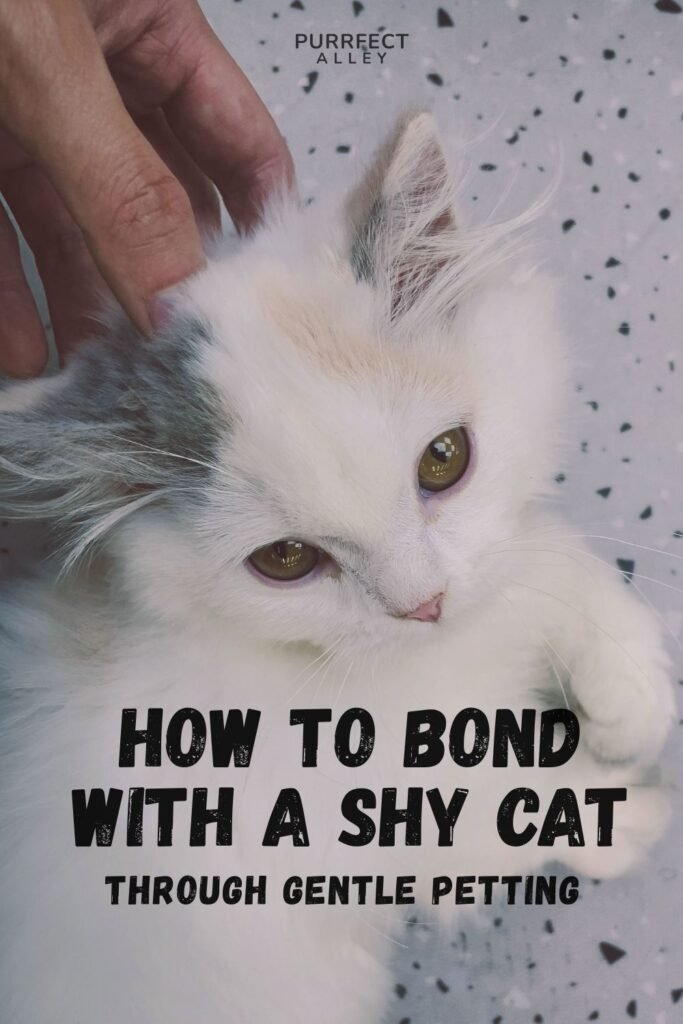
If your cat is shy, newly adopted, or naturally cautious, you’ll want to slow down even more than usual when offering affection. Nervous cats often need extra time and gentle handling to learn that touch is safe and positive.
Here’s a gentle approach I’ve found works well:
- Approach from the side instead of above. Reaching over a cat’s head right away can feel threatening. Moving in from the side, at their level, feels less intimidating.
- Speak softly and calmly. Your voice can be a soothing signal that you’re not there to cause harm.
- Let your cat sniff your hand first. This gives her the chance to say yes or no before you try to pet.
- Start with one or two very light strokes. Keep your touch soft and slow at first.
- Stop while your cat still seems comfortable. Even if that means very brief contact, letting her quit while she feels good builds trust.
Nervous cats can especially benefit from pairing touch with something positive—a reward that says, good things happen when I’m gentle. For many shy kitties, I like keeping a few favorite treats nearby so gentle handling ends on a happy note.
One product I’ve found particularly helpful for calming anxious cats is the VetriScience Calm & Confident Chews. These calming and anxiety supplements are made with natural ingredients designed to reduce stress and fear in cats. Whether it’s a vet visit, grooming day, travel, or just everyday changes, these chews can help your kitty feel calmer and more relaxed. This makes gentle petting and handling easier for both of you, turning potentially stressful moments into positive bonding experiences.
Remember, patience is key—every tiny step forward is a win with shy or nervous cats.
What If Your Cat Doesn’t Like Being Pet?
Some cats simply aren’t very touch-oriented, and that’s okay. It doesn’t mean your cat doesn’t love you.
Cats often show affection in quieter ways, like:
- following you from room to room
- sitting near you
- greeting you at the door
- sleeping beside you
- slow blinking
- chirping or trilling
As cat moms, it helps to remember that love doesn’t always look like cuddling. Sometimes it looks like companionship, trust, and choosing to stay close.
Create a Cozy Space That Encourages Bonding
I’ve noticed my cats are often most open to affection when they’re already relaxed in a space that feels safe, quiet, and familiar. It’s rarely when they’re in the middle of exploring or feeling alert. It’s usually when they’re curled up in a sunny spot, resting by the window, or tucked into one of their favorite cozy corners.
Cats are so much more likely to enjoy gentle touch when they feel secure in their surroundings. When a space feels calm and predictable, your kitty can let her guard down a little. That’s often when those sweetest bonding moments happen — a soft purr, a slow blink, a little head lean into your hand.
Creating that kind of environment doesn’t have to be complicated. A peaceful corner of the home, away from too much noise or foot traffic, can make a big difference. Add a soft bed, a blanket, or a spot with warmth and your cat may naturally begin to settle there when she wants comfort.
A cozy cat bed in a quiet corner can make those calm bonding moments feel a little easier and more natural. One lovely option is the Petmate Self Warming Round Bed. What’s especially nice about this bed is that it has a self-warming design, which helps reflect your cat’s body heat back to her without needing electricity. It feels soft, snug, and comforting — exactly the kind of cozy setup many cats love for napping, relaxing, and being a little more open to affection. The round shape also gives that tucked-in, secure feeling that so many kitties seem to prefer.
Sometimes bonding with a cat isn’t about asking for attention at all. It’s simply about creating a space where she feels safe enough to welcome it.
FAQs
How do you pet a cat the right way?
The best way to pet a cat is to let the cat approach first and focus on areas most cats enjoy, like the cheeks, chin, forehead, and around the ears. Keep your touch gentle and stop if your cat shows signs of overstimulation.
Where do cats like to be pet the most?
Most cats enjoy being pet on the cheeks, under the chin, on the forehead, and between or behind the ears. Some also enjoy gentle strokes along the back.
Where should you not pet a cat?
Many cats dislike being touched on the belly, paws, tail, or lower back. These areas can be sensitive and may cause discomfort or overstimulation.
Why does my cat suddenly bite me when I pet her?
This often happens because your cat has become overstimulated. Signs like tail flicking, skin twitching, or ears turning back usually appear before the bite. Stopping earlier can help prevent this.
Do cats like being pet every day?
Many cats enjoy daily affection, but the type and amount vary by cat. Some like frequent petting, while others prefer brief contact or affection on their own terms.
Final Thoughts From One Cat Mom to Another
Learning how to pet a cat the right way is really about listening with your hands and your heart.
Some cats love cheek rubs. Some prefer a quick chin scratch and then space. Some want affection only when they ask for it. And some simply show love in quieter ways.
The beautiful part is that when we respect our cats’ body language and let them guide the moment, petting becomes more than a habit. It becomes trust.
And in my experience, that trust is what makes every little head bump, purr, and lean-in feel so incredibly special.
🐾 Affiliate Disclosure: As an Amazon Associate, I earn from qualifying purchases. This helps keep our cat community going at no extra cost to you.