
How Cats Communicate With Us: Subtle Signs Every Cat Mom Should Know
If you’re a cat mom, you’ve probably felt it before — that quiet sense that your cat is always “talking” to you, even without words. And the truth is, she is.
Cats communicate in beautifully subtle ways. A slow blink from across the room, a tail held high when you walk through the door, a soft head bump against your hand — these little actions can say so much. While cats may seem mysterious, many of their behaviors are widely recognized by veterinarians, animal behavior experts, and cat welfare organizations as meaningful forms of communication.
The more I’ve learned about feline body language, vocalizations, and daily habits, the more I’ve realized that our cats are constantly telling us how they feel. As cat moms, learning to notice these signals can help us build trust, strengthen our bond, and better support our cats’ emotional well-being.
Why Understanding Cat Communication Matter
Petting is one of the simplest ways we bond with our cats, but it only feels loving if the cat enjoys it too. Cats have sensitive bodies, clear preferences, and Cats may not express themselves the same way dogs do, but that doesn’t mean they’re distant. They simply communicate differently. Understanding your cat’s signals can help you tell the difference between affection, stress, curiosity, overstimulation, and comfort.
This matters because when we respond to our cats in ways that match their needs, they often become more confident and relaxed. It also helps us notice subtle changes in mood or behavior earlier, which can be important for their overall health and happiness.
The Slow Blink: A Quiet Sign of Trust
One of the sweetest ways cats communicate is through the slow blink. If your cat looks at you and slowly closes her eyes, it’s often a sign that she feels safe and relaxed in your presence.
In feline social behavior, a hard stare can feel intense, but a slow blink is much softer. Many cat moms see it as a kind of feline “I trust you,” and while that may sound sentimental, it really does reflect calm and comfort.
How to Respond to a Slow Blink
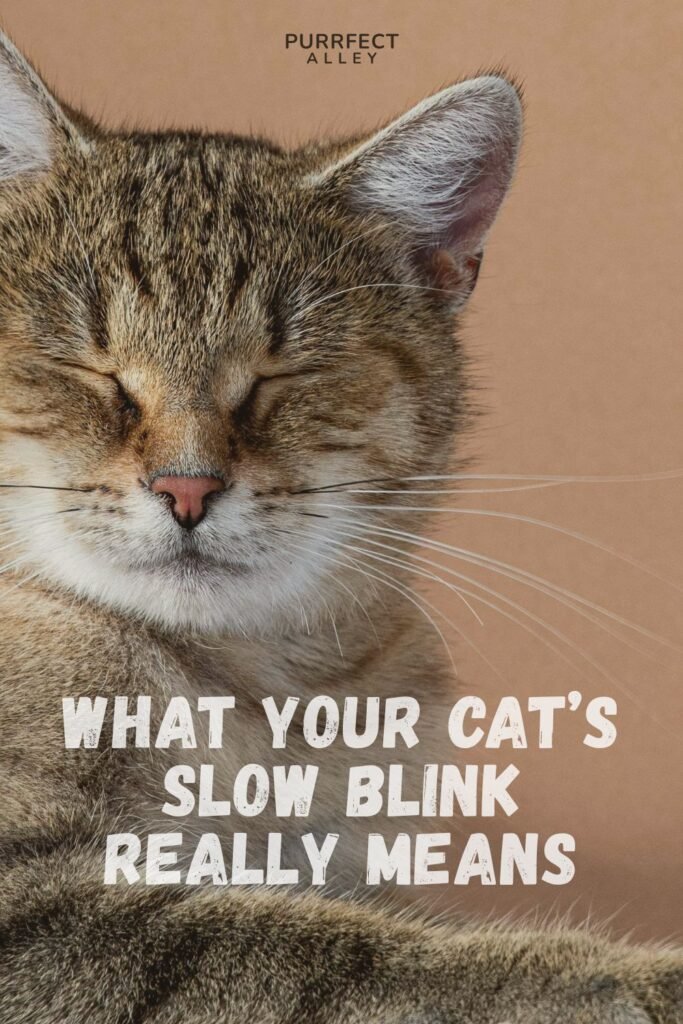
If your cat gives you a slow blink, try offering one back. Many cats respond well to this gentle interaction. It’s such a simple, peaceful way to connect without overwhelming them.
I’ve found that cats often share these quiet moments most easily when they have a comfortable place to settle nearby. That’s why I love and recommend this Self-Warming Cat Bed Pad. It gives cats a soft, cozy spot to rest while staying close to us, whether it’s on the couch, by a sunny window, or near a desk while we work. What makes it especially lovely is the self-warming design, which helps reflect your cat’s own body heat back to her without needing electricity. For cat moms, that means an easy way to make any favorite nap spot feel warmer, safer, and more comforting. It’s also reversible and machine washable, which makes it practical for everyday life. If your cat loves being near you but wants her own little nest of comfort, this is one of those simple things that can make a big difference.
Cat Tail Language: What the Tail May Be Telling You
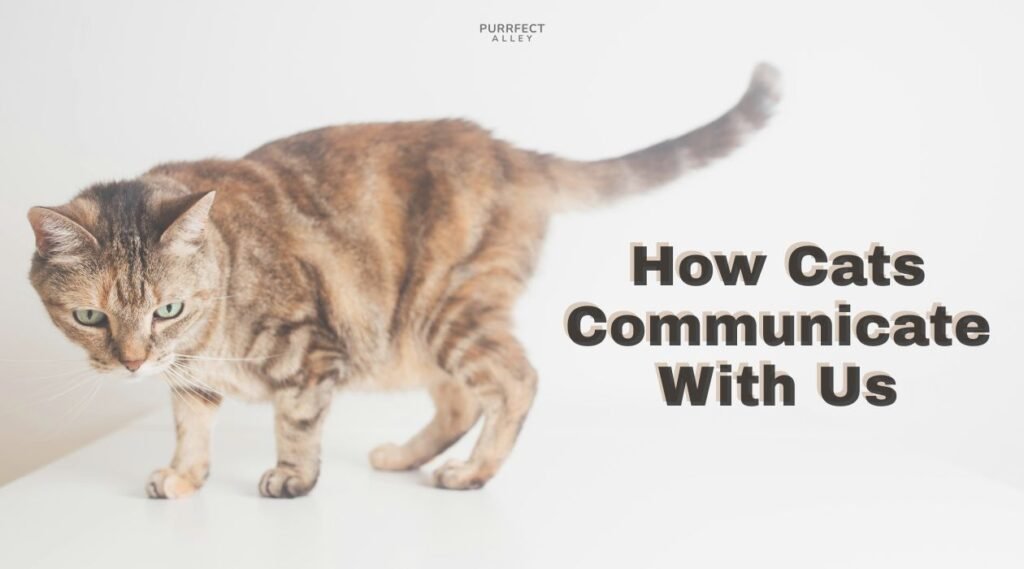
A cat’s tail can reveal a lot about her mood. While tail language should always be read alongside the rest of the body, it’s often one of the easiest communication cues to notice.
A tail held upright usually signals confidence and friendliness. If your cat approaches you with her tail up, that’s often a warm greeting. A slight curl at the tip can make it look even more friendly and relaxed.
On the other hand, a fast flicking or thumping tail may suggest irritation, overstimulation, or intense focus. A puffed-up tail usually means fear or alarm.
Common Tail Signals to Watch For
Tail up
Usually friendly, confident, and social
Tail wrapped around you or another pet
Can be a sign of affection or social bonding
Tail twitching quickly
May suggest agitation or heightened alertness
Puffed tail
Often linked to fear or feeling threatened
Head Bumps and Cheek Rubs: Loving, Familiar, and Scent-Based
When your cat head-butts you or rubs her cheeks against your legs, she’s doing something both sweet and instinctive. Cats have scent glands around the cheeks, forehead, and chin. Rubbing these areas on people or objects helps them leave familiar scent markers behind.
This behavior is often associated with comfort, familiarity, and social bonding. In other words, when your cat rubs against you, she may be saying that you are part of her safe world.
Why Cat Moms Love This Behavior
It feels affectionate because it is. These little nuzzles and face rubs are often signs that your cat feels connected to you and comfortable in your presence.
If your cat enjoys being close and loves a little extra attention, a gentle grooming brush can become such a sweet part of that bonding routine. The Pet Soft Brush with Wood Handle and Boar Bristle Hair is a lovely option for cat moms who want something soft, calming, and easy to use. Because the bristles are gentle, it works especially well for short-haired cats who may not enjoy harsher brushes. Instead of feeling like a chore, brushing can feel more like a mini massage — something many cats genuinely look forward to during quiet moments together. It also helps lift loose fur, smooth the coat, and reduce a bit of dandruff, so your cat not only feels pampered but looks beautifully cared for too. For cat moms, it’s one of those small everyday tools that makes closeness even sweeter.
Purring: Usually Happy, But Not Always Simple
Purring is one of the most comforting sounds a cat can make, and it’s often associated with contentment. A cat curled up in your lap, purring softly while half asleep, is usually feeling safe and comfortable.
But purring isn’t always only about happiness. Cats may also purr when they are stressed, trying to self-soothe, or seeking comfort. That’s why context matters.
If your cat is purring while relaxed, stretched out, and calm, it’s likely a contented purr. If she’s hiding, tense, or acting differently than usual while purring, it may be a sign that she needs extra attention or support.
Meows, Chirps, and Trills: Sounds Cats Often Use With Humans
Many experts note that adult cats often use vocalizations more with humans than with other cats. That means your cat may have developed a special set of sounds just for communicating with you.
Some meows are greetings. Some are requests for food. Others seem to be little check-ins, especially from cats who enjoy “conversations” with their people.
Chirps and trills can also be friendly, attention-seeking sounds. If your cat follows you around while making these noises, she may be inviting interaction or simply narrating her day in true cat fashion.

Every Cat Has Her Own Vocabulary
One of the most charming things about living with a cat is realizing that her sounds often have patterns. Over time, cat moms learn which meow means “feed me,” which one means “play with me,” and which one means “come sit near me.”
If your cat tends to be especially chatty around mealtimes, the Automatic Cat Feeder can be such a helpful way to bring more calm and consistency into the day. Many cats thrive on routine, and having meals served at the same times each day can help them feel more secure and settled. This feeder is especially nice for busy cat moms or multi-cat homes because it holds a generous amount of dry food and is designed to help make feeding more predictable. I also love that it can take some of the pressure off those early-morning food reminders, while still making sure your cats stay on a schedule. For cat moms who want a practical tool that supports routine, reduces stress, and makes daily life a little easier, this is the kind of product that can truly earn its place in the home.
Ears, Whiskers, and Posture: The Small Signals That Matter
Cats communicate with their entire body. Their ears, whiskers, and posture can reveal just as much as their tails or vocalizations.
A relaxed cat often has neutral ears, soft eyes, and a loose body posture. Ears turned sideways or pinned back may signal discomfort, fear, or overstimulation. Whiskers pushed forward can indicate curiosity or high interest, while a crouched posture may suggest uncertainty.
Look at the Whole Cat, Not Just One Sign
This is one of the most important things cat moms can remember. A single signal doesn’t always tell the full story. A twitching tail means something different on a playful cat than it does on a tense one. The full picture matters.
Quiet Companionship Is Communication Too
Not all cats are lap cats, and not all affectionate cats are highly vocal. Some cats communicate love by simply being near us.
They sit beside us on the couch. Sleep at the foot of the bed. Follow us from room to room. Rest in the same space without asking for attention. That quiet presence is meaningful.
When a cat chooses to stay close, she is often showing trust, comfort, and attachment in her own gentle way.
How to Better Understand Your Cat’s Communication Style
Every cat is an individual, so the best way to understand your own cat is through observation and consistency.
Helpful Tips for Cat Moms
Watch for patterns
Notice what your cat does at certain times of day or in certain situations.
Respect boundaries
If your cat seems overstimulated or uncomfortable, give her space.
Reward calm interaction
Respond gently when your cat approaches in a relaxed, social way.
Pay attention to changes
Sudden shifts in behavior or communication style can sometimes point to stress or health concerns.
Final Thoughts From One Cat Mom to Another
As cat moms, we know that the most meaningful moments are often the quietest ones. A blink, a purr, a tail held high, a soft little head bump — these are all part of the way our cats communicate love, trust, needs, and emotions.
The more we learn their language, the more connected we feel to them. And honestly, that may be one of the most beautiful parts of sharing life with a cat.
They may be subtle, but they are never silent.
🐾 Affiliate Disclosure: As an Amazon Associate, I earn from qualifying purchases. This helps keep our cat community going at no extra cost to you.