
Cat-Proofing Your Kitchen: 9 Smart Upgrades for Homes With Curious Cats
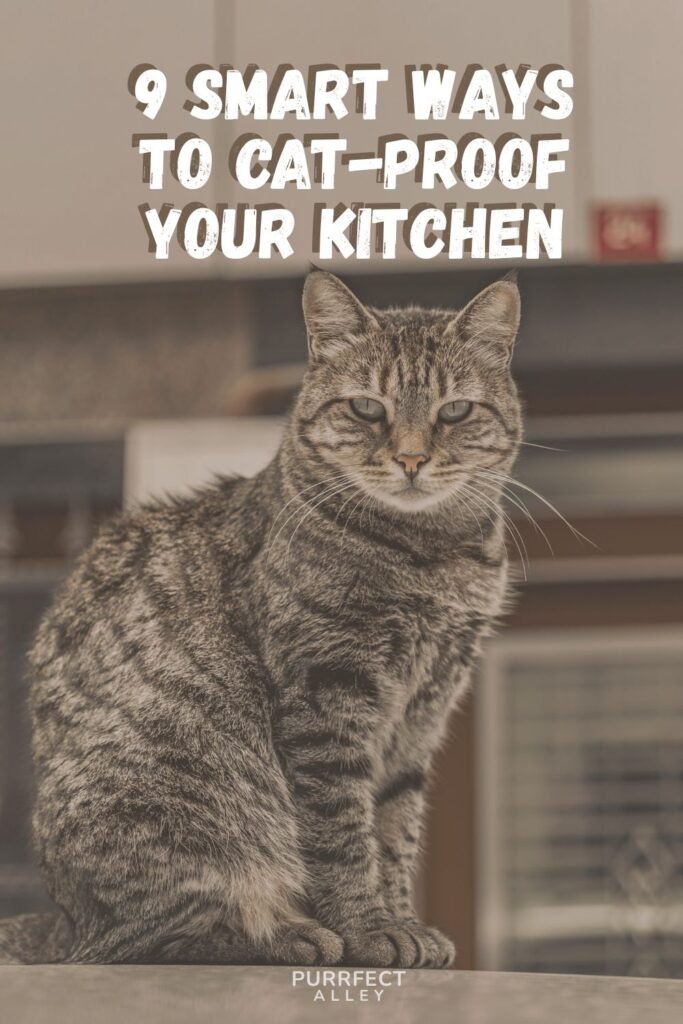
If you live with a cat, you already know this truth: nothing in your home truly belongs only to you.
Not the couch. Not the bed. Not the sunny corner by the window. And definitely not the kitchen.
In my house, the kitchen is where everything gets interesting. The second I open the fridge, one cat appears. If I start chopping vegetables, another somehow materializes beside me like a tiny furry kitchen manager. If I turn my back for five seconds, someone is investigating a grocery bag, sniffing the sink, or considering whether the counter is worth a jump.
It is funny until it is not.
Because as cozy and familiar as kitchens feel to us, they are full of little hazards for curious cats. Sharp tools, hot surfaces, food scraps, dangling cords, cleaning sprays, open trash cans, and all the tempting smells in the world. Once I started looking at my kitchen through cat-mom eyes, I realized a few small changes could make it feel much safer and much calmer.
The good news is that cat-proofing your kitchen does not have to mean making it sterile or ugly. It can still feel warm, welcoming, and lived in. You are just creating a space that works a little better for real life with cats.
Here are the upgrades that have made the biggest difference in my own home.
Why Cats Love the Kitchen So Much
I used to wonder why my cats were so obsessed with the kitchen when they had the entire rest of the house to lounge in. But honestly, it makes perfect sense.
The kitchen smells interesting all day long. There is movement, sound, routine, and usually a person they love standing in the middle of it all. It is warm, it is active, and it is full of things that crinkle, dangle, slide, or smell like food.
From a cat’s point of view, the kitchen is not just a room. It is entertainment.
That is why a cat-friendly kitchen setup is less about fighting your cat’s curiosity and more about making that curiosity a little safer to live with.
1. A Lidded Trash Can Is More Important Than I Ever Realized
This was one of those changes that felt almost too obvious, and yet it helped immediately.
Before I switched to a trash can with a lid, the kitchen trash had a strange magnetic pull. Chicken wrappers, tuna cans, parchment paper, takeout containers, and all the fascinating smells of dinner prep made it way too tempting.
A lidded trash can instantly made the room feel less chaotic. It also gave me peace of mind, especially on busy days when I could not take the trash out right away.
If you have a cat who loves to investigate anything that smells remotely edible, this is one of the easiest cat-proof kitchen upgrades to start with.
2. Airtight Food Storage Makes the Kitchen Feel Calmer
There is something about half-open bags of snacks or pantry staples that turns a normal kitchen into a cat detective scene.
I used to leave things like crackers, bread, treats, and dry ingredients in their original packaging. Which works fine, until a cat decides that the crinkle of a bag is the most important sound in the world.
Airtight containers have helped more than I expected. They keep smells contained, make the pantry look tidier, and remove a lot of the temptation from the counter. They also make the kitchen feel more peaceful, which is not something I expected from food storage, but here we are.
If you are trying to create a more organized kitchen for a home with cats, this is one of those practical little changes that pulls a lot of weight.
3. Under-the-Sink Cabinets Need More Attention Than We Think
I will admit this is one area I overlooked for a while.
The cabinet under the sink is not pretty, so it is easy to ignore. But in many homes, it is where all the things we do not want our cats getting into tend to live. Cleaning sprays, dishwasher tablets, sponges, garbage bags, and mystery bottles you forgot you bought six months ago.
Once I started thinking seriously about kitchen safety for cats, this cabinet became a priority. Even if your cat is not usually a cabinet opener, it is still worth making sure anything potentially harmful is stored securely.
Sometimes cat-proofing is not glamorous. Sometimes it is just finally organizing the mess under the sink like a responsible adult.
4. Stove Safety Is One of Those Things You Hope You Never Need to Learn the Hard Way
If your cat likes to jump onto counters, the area around the stove deserves extra thought.
Warm burners, lingering heat, and knobs that can be bumped or brushed against are not things I like to be casual about anymore. I have become a little obsessive about checking the stove after cooking, and honestly, I think that is fine.
This is one of those parts of a pet-safe kitchen that is more about habits than decor. Double-checking knobs, keeping pans attended, and making sure the stovetop is fully cool before leaving the room are simple routines, but they matter.
Cats are fast. They are quiet. And they are often interested in exactly the thing you hoped they would ignore.
5. Giving My Cats a “Yes” Space Near the Kitchen Helped More Than Constantly Saying No
One of the best things I did was stop expecting my cats to lose interest in the kitchen entirely.
They want to be where I am. Especially around mealtimes. Especially if I am doing something that involves cans, cutting boards, or the sound of a treat bag.
So instead of only trying to keep them away, I gave them a nearby place to be.
For one cat, it is a window perch in the dining area. For another, it is a chair she has somehow decided belongs to her. Neither spot is in the middle of the cooking zone, but both let them supervise me from a safe distance.
This may be the most underrated cat-proofing tip of all. Sometimes the easiest way to reduce counter-jumping is to make another place more appealing.
6. Better Knife Storage Made My Kitchen Feel Safer and Less Cluttered
This was one of those changes that started as an organization issue and turned into a safety one.
For a while, I had a mix of knives in a drawer, a few on the counter, and no real system that felt especially thoughtful. It was not ideal even before I factored in cats. Once I did, I realized sharp kitchen tools were something I wanted to be much more intentional about.
There are a few ways to handle knife storage in a home with pets. Some people prefer an in-drawer organizer. Some use a traditional knife block. Some like a wall-mounted strip. I ended up appreciating the cleaner look of a magnetic knife block, especially in a smaller kitchen where counter space matters.
What I like about it is not that it is trendy. It is that it feels simple. The knives are visible, organized, and not rattling around in a drawer. It also takes up less visual space than the bulky block I used to have.
If you are curious about the style I mean, you can take a look at this magnetic knife block on Amazon.
That said, I would never call any knife storage solution automatically cat-safe just because it looks neat. Placement matters. A lot. In a home with curious cats, anything sharp needs to be kept well away from the counter edge and nowhere near a jump path.
For me, the bigger lesson was this: when your home includes pets, organization is not just about aesthetics. It is often part of safety too.
7. Cords, Twist Ties, and Tiny Dangly Things Are More Tempting Than They Should Be
Cats have a special talent for noticing the one thing in the room you forgot to put away.
A bread tie. A rubber band. The cord from the blender. A produce bag string. Something tiny, unimportant, and somehow irresistible.
I try not to leave those things out anymore, especially in the kitchen where there is already so much stimulation. The fewer small dangling items on the counters, the less there is to bat, chew, drag onto the floor, or mysteriously relocate.
This is one of those quiet little cat-safe kitchen habits that does not feel dramatic, but it really helps.
8. Cleaning Products Need to Be Truly Put Away, Not Just Moved Aside
I used to think moving a spray bottle to the back of the counter counted as putting it away. It does not.
Now I try to be much more careful with cleaning products, especially in the kitchen where surfaces matter and paws end up everywhere. If I spray something, I wipe it down thoroughly. If I use a strong cleaner, I make sure the area is dry before the cats come wandering back through like tiny health inspectors.
It is not about being fearful. It is just about remembering that cats experience the home close to the ground, close to the surfaces, and often with their paws and noses first.
A pet-safe kitchen is not only about what your cat can eat or knock over. It is also about what they can step in, lick, or brush against.
9. Less Counter Clutter Has Been the Biggest Upgrade of All
If I had to choose the one thing that made the biggest difference in my kitchen, it would probably be this.
Less clutter.
Not because I suddenly became a minimalist. I did not. But because a clear counter gives my cats less to investigate, less to knock over, and fewer reasons to jump up in the first place.
When the counters are crowded, the whole room feels busier. There are more edges, more smells, more objects, and more opportunities for trouble. When they are clear, the kitchen feels calmer for everyone.
Now I try to keep only the essentials out. Everything else gets put away after use. It is not perfect every day, but even aiming for less clutter has made the space feel more manageable.
And honestly, that is often the sweet spot in a cat home. Not perfect. Just better.
A Few Gentle Reminders for Fellow Cat Moms
Living with cats means accepting that some level of curiosity is always going to be part of the deal. They are going to inspect. They are going to hover. They are going to appear the second a can opens, no matter where they were hiding two seconds earlier.
So if your kitchen is not perfectly cat-proofed, that does not mean you are doing anything wrong.
Sometimes it is just about noticing the little things:
- the knife too close to the edge
- the grocery bag left on the floor
- the open trash can after dinner
- the cleaner you meant to put away
- the cord dangling just enough to become interesting
These are small details, but small details are often what shape daily life with pets.
Final Thoughts: A Cat-Friendly Kitchen Can Still Feel Warm and Beautiful
I think sometimes when we hear the phrase cat-proofing, we imagine a home that feels clinical or stripped down. But that has not been my experience at all.
For me, cat-proofing the kitchen has really meant making it more thoughtful. More intentional. More in tune with the way we actually live.
The kitchen is still where I make coffee in the morning, wash produce at the sink, and have one cat circling my ankles while another watches from a nearby perch like she pays rent. It still feels like home. Just a little safer. A little less cluttered. A little easier.
And maybe that is the real goal.
Not creating a perfect kitchen.
Just creating one that loves your cats back.
Quick Recap: 9 Smart Kitchen Upgrades for Homes With Curious Cats
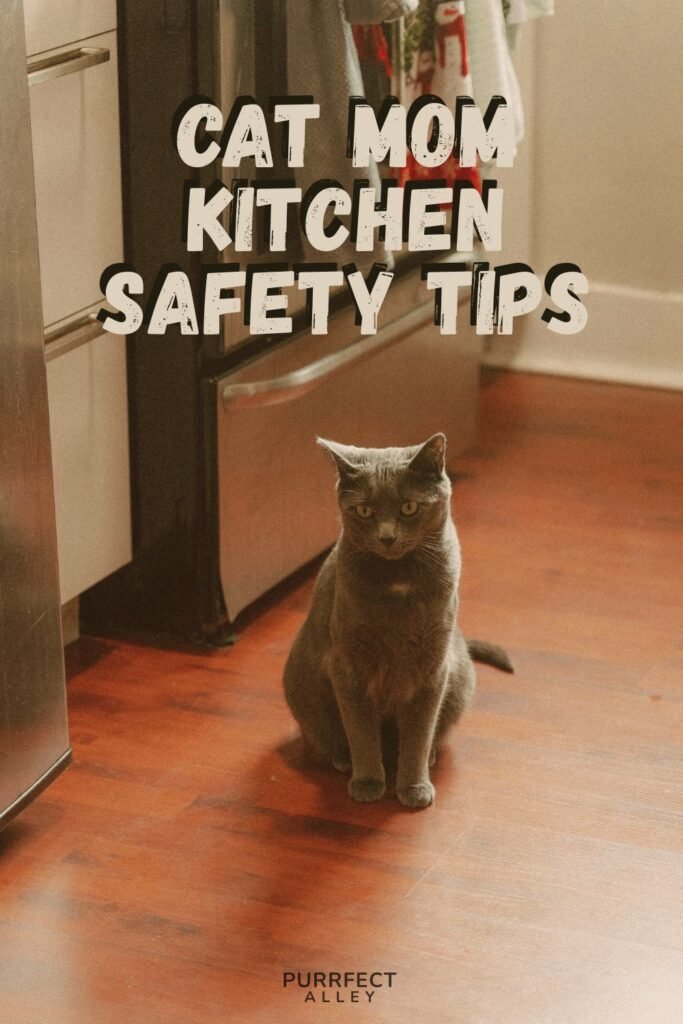
- Switch to a lidded trash can
- Use airtight food storage containers
- Secure under-the-sink storage and lower cabinets
- Be extra thoughtful about stove safety
- Create a nearby “yes” space for your cat
- Upgrade to better knife storage
- Tidy cords and small dangling items
- Put cleaning products fully away
- Reduce countertop clutter
FAQ: Cat-Proofing the Kitchen
How do I make my kitchen safer for a curious cat?
Start with the basics: secure food, cover the trash, store sharp tools carefully, put cleaning products away, and reduce clutter on the counters. Small changes can make a big difference in a pet-friendly kitchen.
How do I stop my cat from jumping on kitchen counters?
It helps to remove temptations, wipe away food smells quickly, and give your cat a nearby perch or approved spot to watch you. In many homes, redirection works better than constant correction.
What is the best knife storage for a home with cats?
That depends on your layout and your cat’s habits. Some cat moms prefer in-drawer storage, while others like a traditional block or a magnetic knife block. The most important thing is secure placement away from edges and jump zones
Are kitchens stressful for cats?
They can be stimulating, especially if there are strong smells, loud sounds, or lots of movement. But many cats also enjoy being near their humans in the kitchen. A calmer, less cluttered setup can help.
This post may contain affiliate links. If you purchase through them, we may earn a small commission at no extra cost to you. We only share products we think may genuinely fit a cat-friendly home.