
How to Vacuum Cat Hair Without Stressing Your Cat
If you’re a cat mom in the USA, you already know that cat hair has a magical way of showing up everywhere. It floats across hardwood floors, clings to rugs, gathers along baseboards, and somehow ends up on the one black sweater you wanted to wear out. As a fellow cat mom, I’ve learned that the real challenge isn’t just figuring out how to vacuum cat hair without stressing your cat—it’s doing it in a way that keeps your home clean and your kitty feeling safe.
I learned this the hard way with my own cat, who used to disappear under the bed the second she heard the vacuum come out of the closet. At first, I thought regular cleaning was just something she would have to “get used to.” But over time, I realized that a few simple changes made a huge difference. Using a quieter setting, choosing a vacuum that helps me clean faster, and being more mindful about where I empty the bin turned vacuuming from a full-on household event into a much calmer routine.
If you’ve been wondering how to vacuum cat hair without scaring your cat, the good news is that you do not have to choose between a fur-free home and your cat’s peace of mind. Here’s what has helped me most.
Why Vacuuming Can Stress Cats Out
Before getting into practical tips, it helps to understand why many cats hate vacuums so much. Cats have highly sensitive hearing, and what sounds like normal household noise to us can feel overwhelming to them. A vacuum is loud, unpredictable, and often moves quickly into their space. From a cat’s perspective, it can seem like a giant, roaring threat.
That’s why learning how to vacuum cat hair without stressing your cat starts with empathy. The goal isn’t to force your cat to tolerate something scary. It’s to reduce the intensity of the experience and give them more control over how they respond.
1. Start With a Quiet Mode Whenever Possible
One of the best changes I ever made was switching to a vacuum with a low-power or quiet mode. Most modern stick vacs offer this feature, and it can be a game changer for cats with sensitive ears.
When I use the lower setting, my cat still notices the vacuum, of course, but she no longer bolts the second it turns on. The sound is softer, less harsh, and much easier for her to tolerate. For everyday fur pickup, especially on hard floors or light rugs, quiet mode is often enough.
If you’re shopping for a vacuum and wondering how to vacuum cat hair without stressing your cat, look for models that specifically mention:
- Quiet mode or low-power mode
- Multi-surface settings
- Good performance on pet hair without needing max suction all the time
This matters because the faster and more gently you can clean, the less time your cat spends dealing with the noise.
2. Vacuum in Short Sessions Instead of One Big Clean
I used to save all my vacuuming for one long weekend cleaning session. It seemed efficient for me, but it was awful for my cat. Now I break it up into short, targeted sessions—maybe five to ten minutes at a time.
This approach works especially well if you’re trying to figure out the best way to vacuum cat hair without stressing your cat. Instead of dragging the vacuum through every room in one go, clean the areas where fur builds up most:
- Around the litter box
- Under the dining table
- Along baseboards
- Near favorite sleeping spots
- On rugs and upholstered furniture
Shorter sessions mean less noise exposure and less disruption. As a bonus, it keeps fur from building up so badly that you need a deep, noisy clean later.
3. Use LED or Laser Headlights to Clean More Efficiently
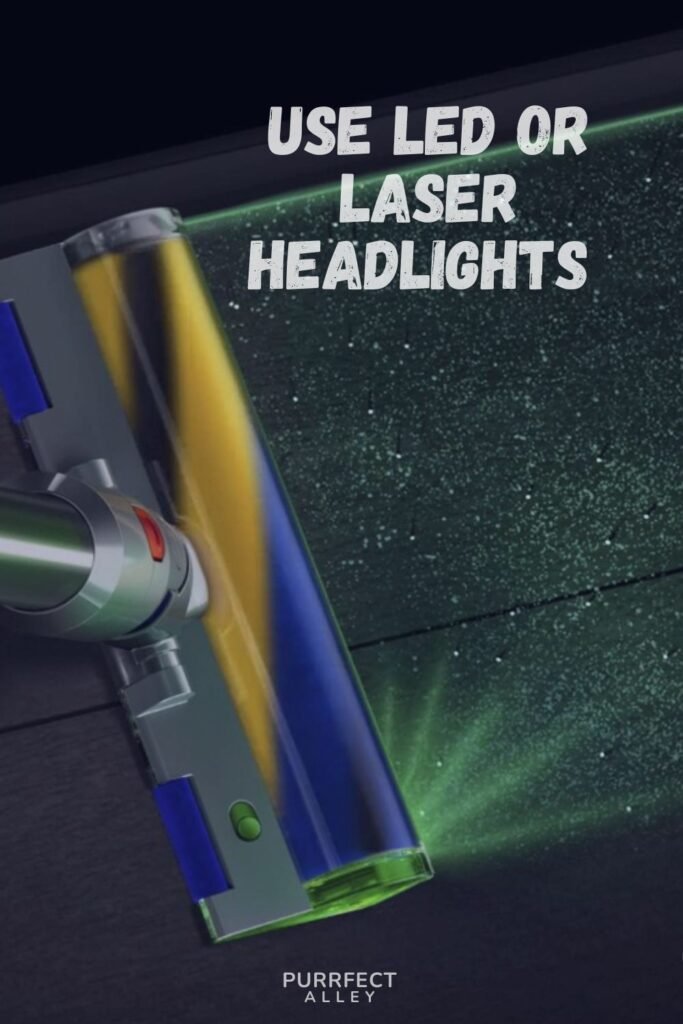
This may sound like a small feature, but I genuinely love vacuums with headlights. Models with LED or laser-style illumination, like some Dyson vacuums, help you spot fur, dust, and dander you would otherwise miss.
As a cat mom, I can tell you this is one of those features you don’t realize you need until you have it. In daylight, my floors may look clean. Then I turn on the vacuum headlight and suddenly see a trail of fur tumbleweeds along the edges of the room.
If your goal is how to vacuum cat hair without stressing your cat, this feature helps because it makes cleaning faster and more precise. You spend less time going over the same area again and again, and your cat spends less time listening to the vacuum. It’s a win for both of you.
LED and laser headlights are especially useful for:
- Hardwood and tile floors
- Cleaning under furniture
- Spotting fur in corners
- Early morning or evening touch-ups
If your cat is especially sensitive, check out our guide to the Dyson V15 Detect Cordless Vacuum with laser guided cleaning function.
4. Create a Safe Zone Before You Start
One of the kindest things you can do before vacuuming is give your cat a place to retreat. I always make sure my cat has access to a quiet room, a cozy bed, or her favorite perch before I start cleaning.
That way, she doesn’t feel trapped or chased by the vacuum. She has options, and that matters. Cats tend to cope better with stressful situations when they can choose distance.
A simple safe-zone setup might include:
- A room farthest from where you’re vacuuming
- A calming cat bed or blanket
- Fresh water
- A favorite toy
- White noise or soft music
5. Never Vacuum Near Your Cat on Purpose
This may seem obvious, but it’s worth saying: don’t vacuum close to your cat just to “help them get used to it.” I know some people mean well, but forcing exposure can backfire and make the fear stronger.
When learning how to vacuum cat hair without stressing your cat, distance is your friend. Start with the room your cat is not in. If you need to clean a space your cat usually occupies, wait until they’ve moved to another area first.
I’ve found that respecting my cat’s personal space has made her much more relaxed overall. She doesn’t associate the vacuum with being cornered, and that has helped reduce her anxiety over time.
6. Empty the Vacuum Away From Your Cat
This tip is so underrated. Sometimes the loudest, dustiest part of vacuuming isn’t the cleaning itself—it’s emptying the bin. If your vacuum releases a puff of dust and dander every time you dump it, that can be unpleasant for both you and your cat.
That’s why I love vacuums with hands-free emptying systems, such as a Shark auto-empty dock. They help keep dust contained and reduce the cloud of debris that can spread back into the room.
If you’re serious about how to vacuum cat hair without stressing your cat, emptying the vacuum away from them is a smart habit. I try to do it:
- In a separate room
- In the garage, if possible
- After my cat has left the area
- Using sealed or low-contact emptying features whenever available
This is especially helpful for homes with multiple cats, allergy issues, or lots of dander.
7. Time Your Cleaning Around Your Cat’s Routine
As cat moms, we know our cats have very specific schedules. Mine has clear “active,” “snack,” and “do not disturb” windows. I’ve learned that vacuuming right in the middle of her nap is a guaranteed way to make her grumpy.
Try vacuuming when your cat is naturally in a calmer or more independent mood. For some cats, that’s after a meal. For others, it may be when they’re bird-watching from a window perch or hanging out in another room.
This simple timing shift can make a big difference if you’re trying to master how to vacuum cat hair without stressing your cat at home.
8. Reduce Fur Before It Hits the Floor
One of the best vacuuming tips is actually not about vacuuming at all. The less loose fur in your home, the less often you need to bring out the vacuum.
A few habits that help:
- Regular brushing
- Washable throws on favorite cat spots
- Lint rolling upholstery between cleans
- Using mats near litter areas
- Wiping surfaces with pet-safe dust cloths
If your cat tolerates grooming, a quick brushing session a few times a week can cut down on shedding noticeably. For more daily cleanup ideas, you could also check out our roundup of the Best Cat Hair Removers for Furniture.
9. Choose Attachments That Help You Clean Faster
A vacuum is only as useful as the tools that come with it. For cat hair, I rely heavily on:
- A motorized mini brush for furniture
- A crevice tool for corners and baseboards
- A soft roller head for hard floors
- An extension wand for under beds and sofas
The right attachment means fewer passes, less frustration, and less total noise. That’s a big part of how to vacuum cat hair without stressing your cat—not just lowering the sound, but reducing the duration of the whole process.
10. Support Your Cat With Positive Associations
I don’t reward my cat during vacuuming itself, because she usually wants space, not interaction. But afterward, I try to reconnect in a positive way. A treat, a little play session, or some quiet cuddle time can help her settle.
Over time, this creates a gentler routine: the vacuum happens, then life goes back to normal. That predictability can be comforting.
What Research Tells Us About Cats and Noise
While every cat is different, animal behavior experts generally agree that cats are sensitive to sudden, loud, and unfamiliar sounds. Their hearing is much more acute than ours, which helps explain why appliances can feel so intense to them.
Stress in cats may show up as:
- Hiding
- Flattened ears
- Dilated pupils
- Tail flicking
- Avoiding certain rooms
- Changes in appetite or litter box habits
If your cat seems highly distressed by vacuuming, it may help to talk with your veterinarian. Sometimes a strong reaction to noise can be part of broader anxiety, and it’s worth getting professional guidance.
For most households, though, the biggest improvements come from practical changes: lower noise, shorter sessions, better timing, and more respectful cleaning habits.
A Cat-Mom-Friendly Vacuuming Routine
If you want a simple system, here’s the routine I follow:
- Make sure my cat has access to her safe space.
- Use quiet or low-power mode.
- Start with the room she’s not in.
- Use headlights to spot fur quickly.
- Focus on high-shed zones first.
- Keep the session short.
- Empty the vacuum away from her, ideally using hands-free emptying.
- Let the house return to calm and check in with her afterward.
This routine has made a huge difference in my home. I still vacuum often—because, well, cat hair—but it no longer feels like I’m upsetting my cat every time I clean.
Final Thoughts for Fellow Cat Moms
If you’ve been trying to figure out how to vacuum cat hair without stressing your cat, please know that you’re not overthinking it. Wanting a clean home and a calm cat is not too much to ask. With the right vacuum features, a gentler routine, and a little patience, you really can have both.
As cat moms, we’re always balancing practical life with our cats’ comfort and wellbeing. That’s part of what makes our bond so special. We notice the little things, we adjust, and we create homes that feel safe for everyone in them.
So if your kitty still gives the vacuum side-eye, you’re not alone. Start small, stay consistent, and celebrate progress. A cleaner home and a less-stressed cat are absolutely possible—and we’re all figuring it out together.
Links may include affiliate partnerships. Purchases support this site at no extra cost to you.